26 Jun 2026
Data Sync Between Live Betting Feeds and Updated Records in Regional Table Tennis Circuits Alongside Virtual Racing Grids
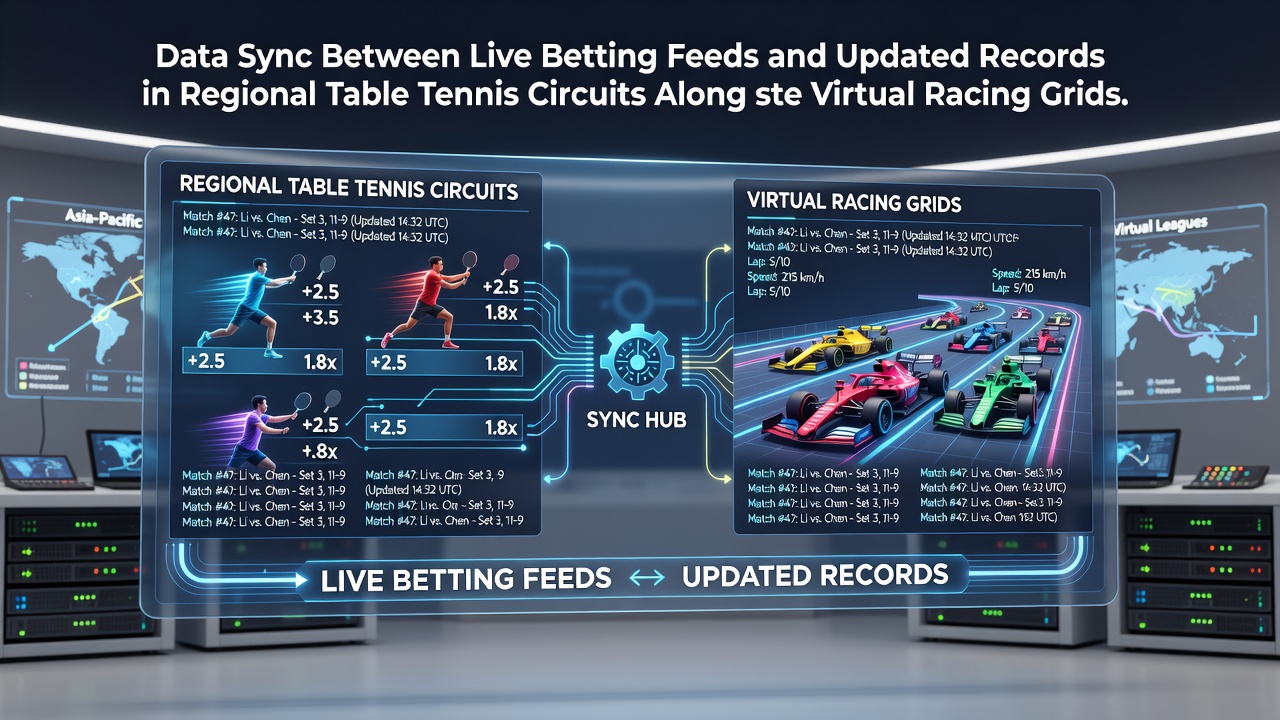 Regional table tennis circuits and virtual racing grids have developed interconnected systems that pull live betting data directly into official performance logs, creating continuous updates for player rankings and simulation standings. These pipelines operate through standardized APIs that transmit odds fluctuations, wager volumes, and outcome probabilities from betting platforms into central databases maintained by circuit organizers. Data flows occur in milliseconds, allowing regional federations to adjust records without manual intervention while virtual grid operators incorporate similar feeds to refine simulation parameters. The synchronization process begins when betting platforms receive real-time inputs from table tennis matches in circuits across Asia and Europe. Sensors on tables capture ball speed, spin rates, and rally durations, then route this information alongside betting activity to shared servers. Regional associations receive these combined datasets, which algorithms use to recalculate player metrics such as win percentages and point differentials. Virtual racing grids apply parallel methods, where simulated vehicle telemetry merges with betting patterns to update lap records and driver hierarchies.
Technical Architecture Supporting Real-Time Updates
Multiple layers handle the data movement between sources. Edge computing nodes positioned near competition venues preprocess raw feeds from both physical table tennis sensors and virtual grid software engines before forwarding compressed packets to cloud repositories. Database systems employ event-driven architectures that trigger record refreshes whenever betting volumes exceed predefined thresholds or when match statistics deviate from historical norms. Observers note that these setups reduce latency to under 200 milliseconds in most documented cases. Security protocols encrypt transmissions between betting operators and sports authorities to maintain integrity across jurisdictions. Audit trails log every data packet exchanged, enabling verification of how specific wagers influence updated standings in table tennis leagues or virtual race classifications. As of June 2026, several circuits have adopted blockchain elements to timestamp entries, creating immutable sequences that link betting events to final record adjustments.Applications in Regional Table Tennis Circuits
Table tennis federations in Southeast Asia have integrated betting-derived analytics into their ranking algorithms since 2023. When live wagers shift dramatically during a regional tournament match, the system flags corresponding performance variables for review and potential incorporation into player profiles. This approach allows smaller circuits to maintain competitive balance by accounting for external market signals that reflect participant form more rapidly than traditional scouting reports. Coaches and analysts access synchronized dashboards that display both on-court statistics and aggregated betting trends side by side. One documented implementation in a national circuit showed how rally win rates adjusted within minutes of significant wager movements, producing more responsive seedings for subsequent events. Data indicates that these integrations have streamlined administrative processes while preserving the separation between betting markets and official governance structures.