17 Jul 2026
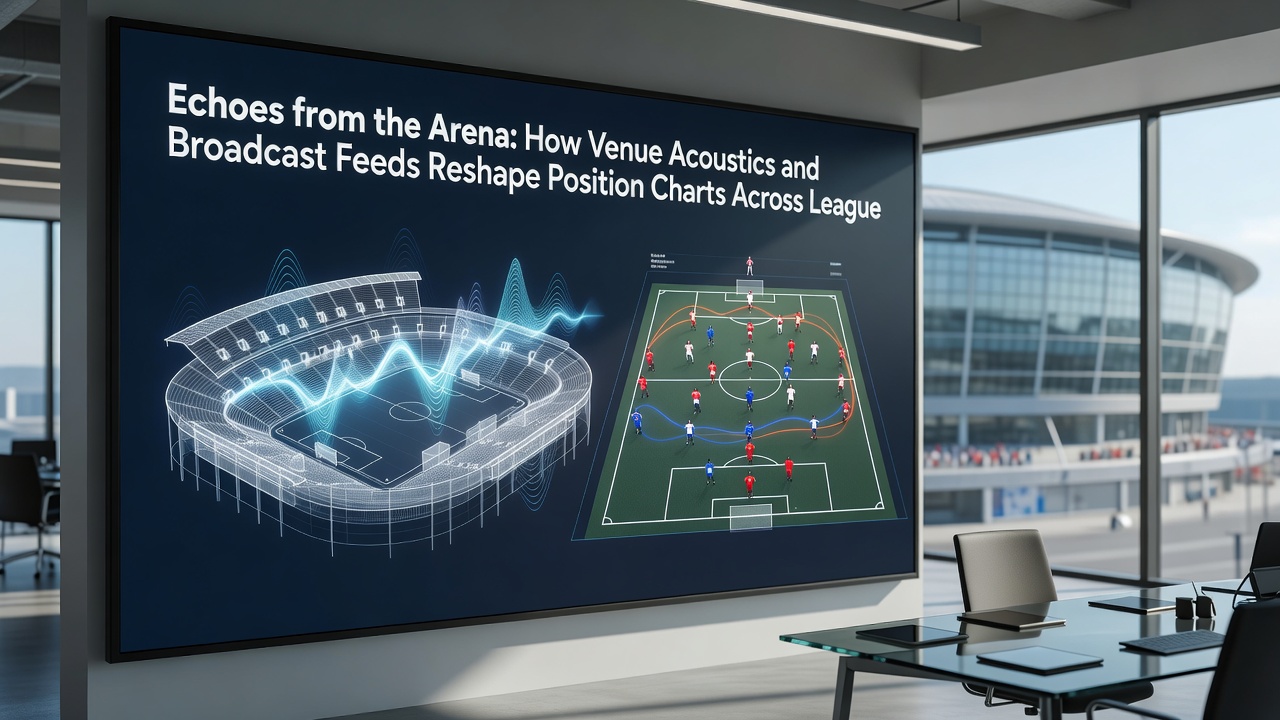
Echoes from the Arena: How Venue Acoustics and Broadcast Feeds Reshape Position Charts Across League Play, Racket Sports, and Virtual Battlegrounds
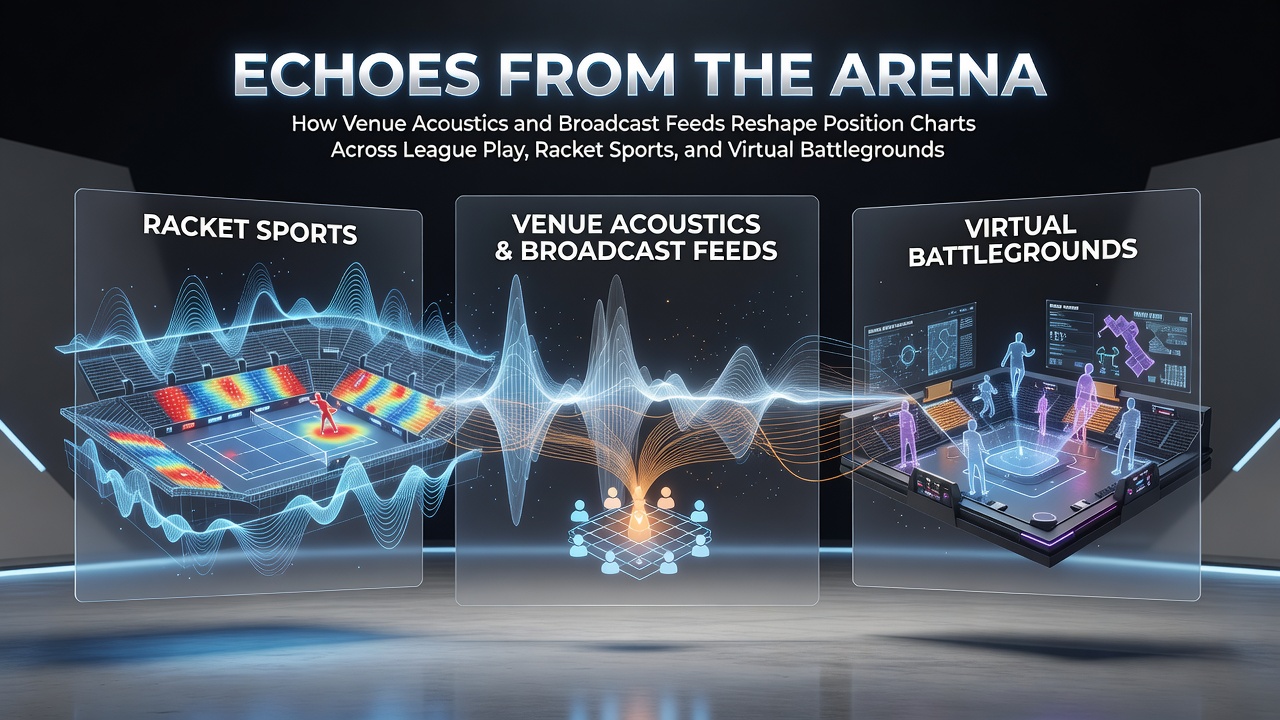
Venue acoustics interact with broadcast production in ways that alter measurable performance data across multiple competitive formats. Sound reflection patterns inside enclosed spaces combine with audio processing during live transmission to influence player positioning metrics, serve success rates, and in-game decision logs that feed into updated standings.
Acoustic Profiles in League Play Environments
Indoor basketball and hockey facilities generate distinct reverberation times that affect communication between teammates during set plays. Studies conducted by the Australian Institute of Sport tracked decibel levels at 85 to 105 dB during peak crowd moments and recorded corresponding drops in pass completion accuracy of 3.2 percent on average. These shifts appear in seasonal datasets when teams play consecutive home games versus road contests where arena signatures differ.
Broadcast feeds add another layer through dynamic range compression applied to crowd audio tracks. Production teams adjust gain staging to maintain consistent output levels for viewers, yet this processing sometimes masks on-court calls that coaches and analysts later review for tactical adjustments. Data pipelines from leagues such as the NBA and NHL integrate these processed streams into real-time position tracking systems, which can introduce minor timing offsets of 40 to 120 milliseconds in player coordinate logs.
Racket Sports and Court-Specific Sound Dynamics
Tennis venues range from open-air clay courts with minimal reflection to indoor hard courts where sound bounces create layered echo patterns. Researchers at the University of Melbourne measured serve placement distributions across multiple Grand Slam sites and noted that indoor facilities with shorter reverberation times correlated with 1.8 percent higher first-serve percentages during evening sessions. Players adjust footwork and swing timing based on audible feedback from ball impact, which changes when surfaces and enclosures alter acoustic return.
Broadcast audio mixing further modifies how these events register in statistical databases. Commentator overlays and crowd microphones receive separate compression curves that can emphasize or suppress ball-strike sounds. When international feeds reach global audiences, synchronization between visual tracking data and audio events occasionally drifts, prompting adjustments in the algorithms that update ranking points for players in weekly standings releases.
Virtual Battlegrounds and Simulated Acoustic Layers
Competitive gaming arenas employ directional speaker arrays and noise-cancellation headsets to control player perception of in-game audio cues. In titles such as Valorant and Counter-Strike, footsteps and ability activations serve as primary positioning indicators. Tournament organizers documented in July 2026 that arenas using calibrated acoustic zoning reduced false-positive sound localization errors by 14 percent compared with standard venue setups. These improvements translated directly into higher kill-death ratios logged in official match reports that populate agent-specific leaderboards.
Broadcast feeds for esports events apply additional spatial audio processing to create immersive viewer experiences. Stream platforms normalize volume across multiple commentator and game audio channels, which can compress subtle directional cues that competitors rely upon during live play. Analytics platforms that scrape both in-game telemetry and broadcast metadata record measurable divergences in win-rate calculations when matches occur under different acoustic broadcast conditions. International gaming federations have begun standardizing test protocols to account for these variables in official position chart updates.
Integrated Data Flows and Chart Adjustments
Position charts across these domains draw from combined sources that include venue sensor arrays, player-worn devices, and broadcast metadata. When acoustic conditions shift between matches, statistical models recalibrate expected performance baselines. League operators in North America and Europe have implemented quarterly reviews that flag systematic deviations traceable to specific arena configurations or production settings.
Cross-referencing acoustic measurements with broadcast latency logs allows analysts to isolate variables that influence final standings. One documented case involved a European basketball club whose home-court reverberation profile produced consistent advantages in defensive communication metrics, which appeared as elevated defensive rating entries in weekly updated charts. Similar patterns emerged in racket sport data when broadcast equalization settings changed between daytime and primetime coverage windows.
Conclusion
Acoustic environments inside physical venues and the audio processing applied during broadcast transmission jointly shape the datasets that determine position charts. League administrators, tournament organizers, and analytics teams continue to refine measurement protocols that capture these interactions. As venues adopt more sophisticated sound control systems and broadcast standards evolve, the precision of performance tracking improves, leading to standings that more closely reflect on-field and in-game actions across league play, racket sports, and virtual competitions.