7 Aug 2026
How Streaming Platforms Feed Real-Time Updates into Evolving Team Standings for Hockey Leagues and Multiplayer Esports Circuits
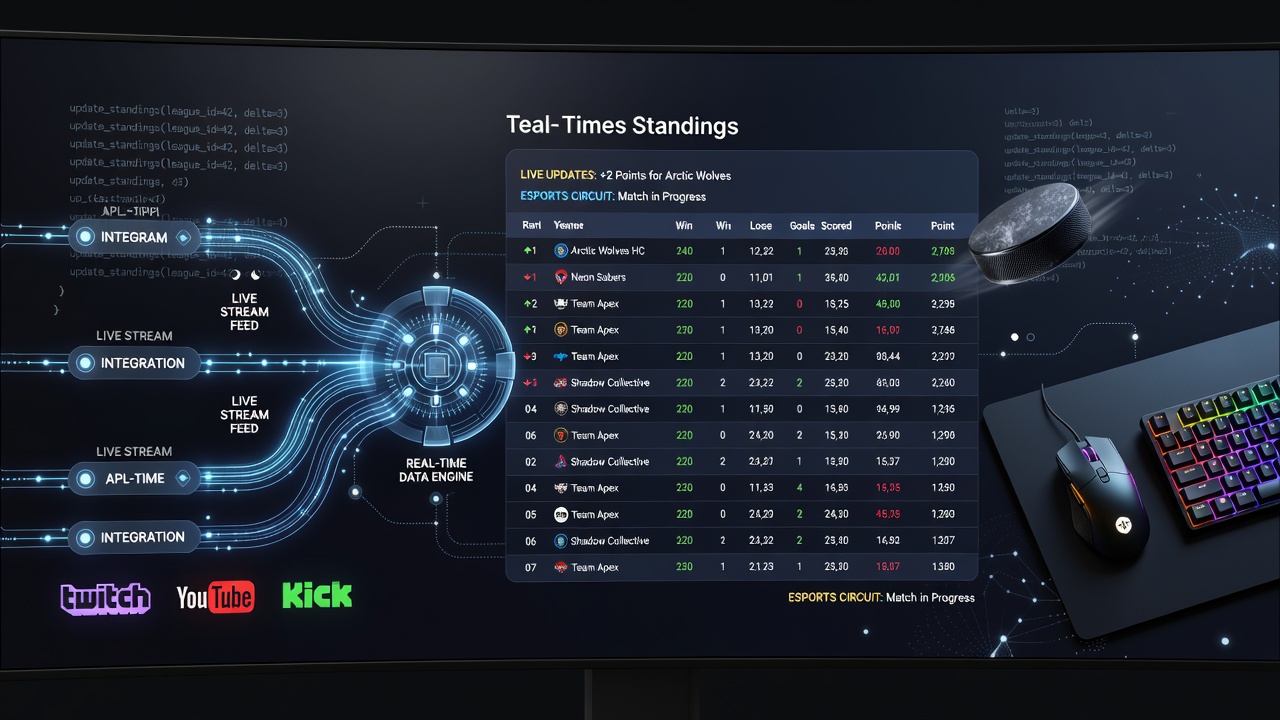
Streaming platforms capture live game data from hockey arenas and esports arenas then route that information through structured pipelines to refresh team standings in near real time. Data flows from on-ice sensors and broadcast cameras in professional hockey leagues while similar telemetry streams emerge from game servers in circuits such as the VALORANT Champions Tour and League of Legends Championship Series. These pipelines combine video encoding with metadata overlays so that score changes, player statistics, and time stamps reach central league databases within seconds of each event.
Data Capture in Hockey Environments
Professional hockey organizations equip rinks with optical tracking systems and puck sensors that record every pass, shot, and save during matches. Broadcasters ingest these signals alongside traditional camera feeds then package them for delivery over content delivery networks to viewers worldwide. When a goal registers the system assigns a precise time code and forwards the event to a league-operated application programming interface that recalculates points, goal differentials, and playoff probabilities. Observers note that this process repeats dozens of times per period because each goal or penalty directly alters the numerical order of teams in conference standings.
Platforms maintain dedicated synchronization servers that poll these APIs at sub-second intervals during August 2026 regular-season games. The servers compare incoming values against cached standings then push incremental updates to mobile and web applications used by fans and media outlets. Because hockey rules assign two points for a regulation win and one point for an overtime loss the algorithms must evaluate not only final scores but also the exact minute when each tally occurred.
Parallel Processes in Multiplayer Esports
Esports circuits generate comparable data volumes through server-side logging rather than physical sensors. Game clients transmit match events such as round wins, agent selections, and economy snapshots to tournament organizers in real time. Streaming platforms embed these events into live broadcasts via overlays while simultaneously forwarding the same structured data to ranking engines maintained by the competition administrators. In circuits like the VALORANT Champions Tour a single map victory can shift a team's map differential and seed position for upcoming stages so the update latency directly influences viewer perception of leaderboard movement.
Engineers route esports telemetry through the same content delivery networks that carry video yet they add lightweight JSON packets that bypass video compression queues. This separation allows standings to refresh even when broadcast video experiences brief buffering. Data indicates that average latency between an in-game kill and a corresponding leaderboard adjustment now falls below three seconds across major North American and European tournaments.
Integration Points Between Streams and Standings
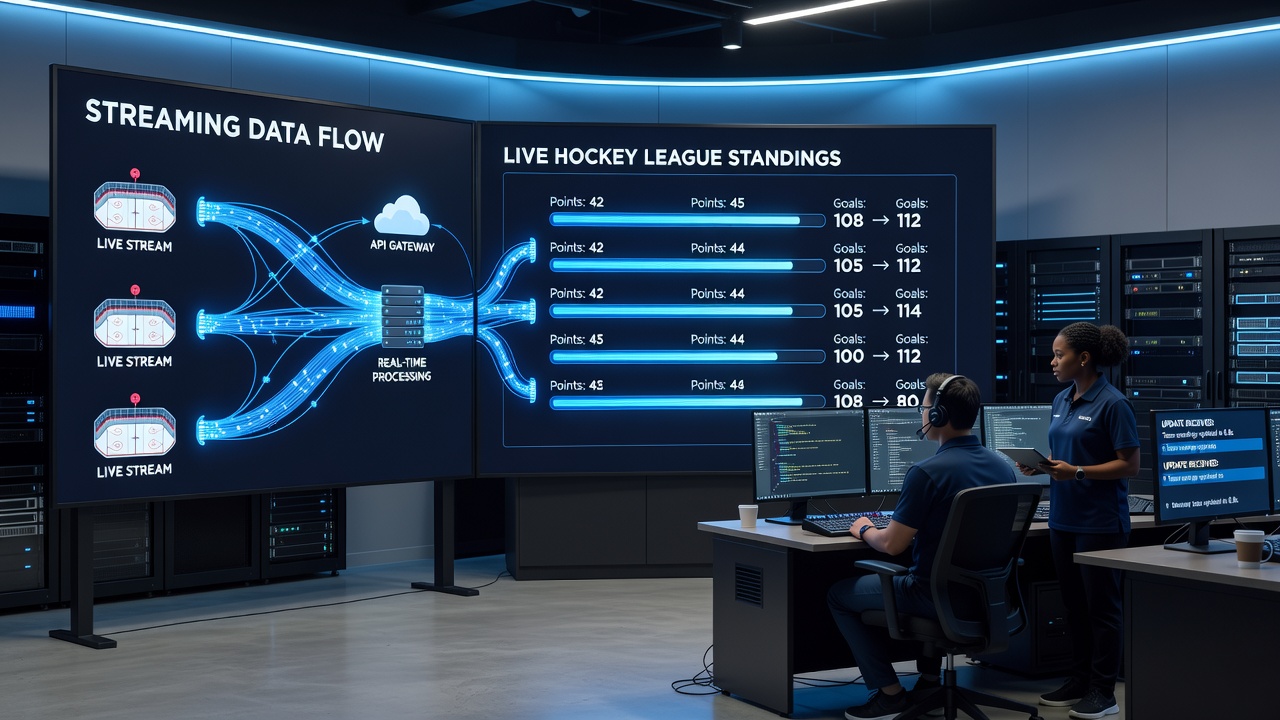
League operators publish open schemas that define every field required for standings calculations. Streaming platforms consume these schemas through authenticated endpoints then map incoming events to the correct database records. When a hockey power-play goal occurs the platform tags the event with team identifiers, player identifiers, and situational modifiers before transmitting the packet. Esports platforms apply analogous tagging for round outcomes and side selections. Both systems rely on consensus timestamps so that events processed out of chronological order receive automatic correction routines.
Content delivery networks cache these metadata streams at edge locations near major population centers. Viewers who open a standings page while watching a stream therefore receive the most recent values without additional round trips to origin servers. Industry reports from the National Hockey League confirm that peak concurrent queries during playoff games exceed one million per minute yet response times remain under two hundred milliseconds because of this distributed architecture.
Handling Edge Cases and Corrections
Officials sometimes reverse goals after video review or disqualify rounds in esports matches following rule violations. The data pipelines include rollback mechanisms that propagate corrected values back through the same channels used for initial updates. When a reversal occurs the system recalculates all dependent statistics including goal differentials and win percentages then broadcasts the revised standings to every connected client. Teams and media receive notification flags that distinguish provisional from finalized numbers so downstream applications avoid displaying transient inaccuracies.
August 2026 schedules feature overlapping hockey preseason tournaments and esports mid-season invitationals. These concurrent events stress test the shared infrastructure and reveal capacity limits in certain geographic regions. Operators respond by increasing the number of edge nodes and tightening the polling intervals on critical endpoints.
Conclusion
Streaming platforms therefore serve as both delivery vehicles for video and conduits for structured data that keep hockey and esports standings current. The same networks that transmit high-definition footage also carry compact event packets that trigger immediate recalculation of points, differentials, and qualification probabilities. As leagues expand their use of sensors and server logging the volume of events processed each match continues to rise yet the underlying synchronization logic remains consistent across both physical and digital competitions.