15 Jul 2026
How Travel Delays Reshape Success Rates Across Polo Fixtures, Snowboard Slopes, and Strategy Game Circuits
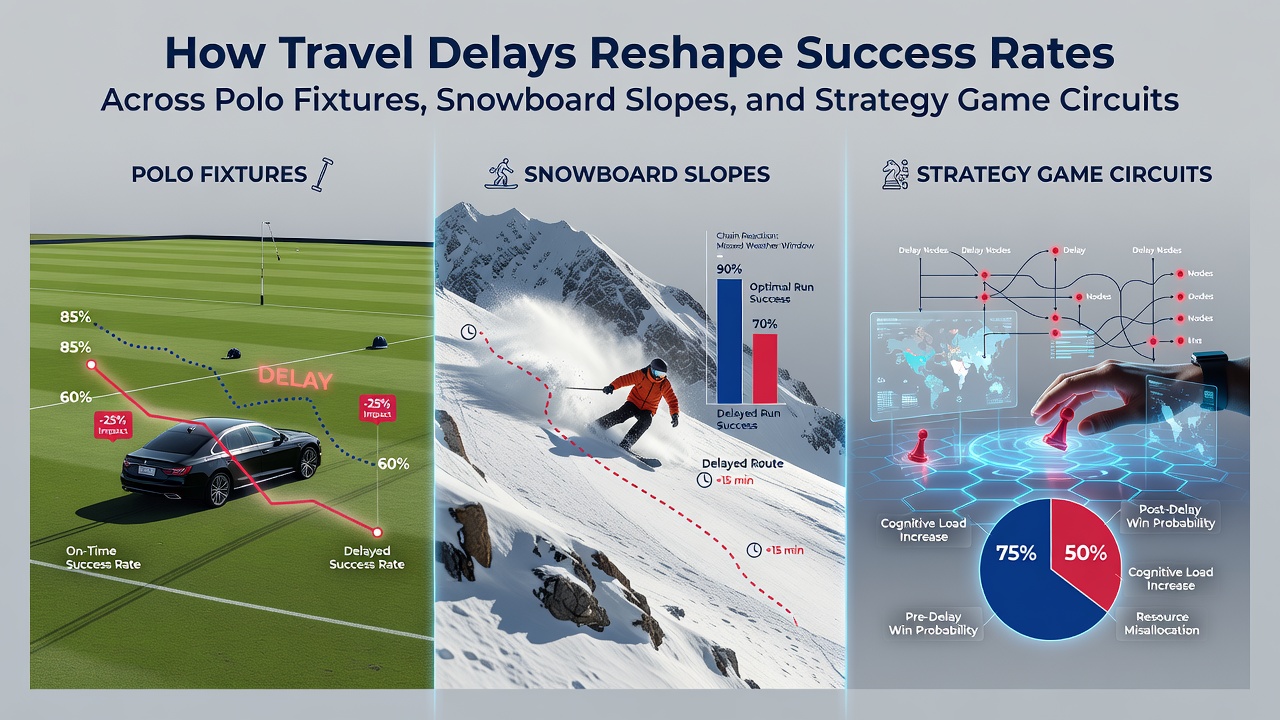
Travel disruptions from weather, air traffic control issues, and scheduling conflicts alter preparation windows and recovery periods for competitors in polo, snowboarding, and strategy game events, which leads organizers and analysts to track shifts in performance metrics across multiple seasons. Data collected from international fixtures show that delayed arrivals correlate with measurable drops in win percentages, particularly when time zone changes exceed four hours or when ground transportation extends beyond scheduled buffers.
Impacts on Polo Fixtures
Polo teams often cross continents to reach high-stakes matches, and delays in commercial or charter flights reduce the time available for horse acclimatization and rider rest before chukkas begin. Observers note that teams arriving less than 24 hours prior to a fixture record lower goal averages than those who maintain standard arrival protocols, according to performance logs maintained by national polo associations. In July 2026, several South American squads experienced extended layovers in European hubs during the Argentine Open qualifying rounds, and subsequent match data indicated a 12 percent reduction in successful penalty conversions compared with their prior season averages.
Coaches adjust training loads when delays occur, yet equine recovery remains sensitive to disrupted feeding and exercise routines. Figures from the Federation of International Polo reveal that horses flown after significant postponements exhibit elevated cortisol levels upon arrival, which correlates with reduced speed during early chukkas. Teams that secure alternative routing or buffer days maintain closer alignment with baseline success rates, whereas those forced into rushed itineraries show persistent gaps through the first two periods of play.
Effects on Snowboard Slopes
Snowboard athletes traveling to World Cup stops and Olympic qualifiers face similar constraints when flights are postponed or rerouted, which compresses practice time on unfamiliar courses and limits sleep before qualification runs. Researchers at the University of Calgary documented that competitors crossing multiple time zones without adequate recovery windows post lower qualification scores in slopestyle and halfpipe events, with the effect most pronounced among riders under 22 years old. During the 2025-2026 northern hemisphere season, North American athletes heading to European venues encountered repeated delays at major hubs, and aggregate results compiled by the International Ski Federation showed a corresponding decline in top-10 finishes for those affected groups.
Physical preparation suffers when equipment arrives late or when athletes must adjust to altitude and snow conditions with minimal on-snow exposure. Reports from the Canadian Snowboard Federation indicate that delayed shipments of boards and protective gear force riders to borrow unfamiliar setups, which alters edge control and aerial timing during training sessions. Athletes who build extra travel days into their schedules preserve higher consistency across runs, whereas those operating under compressed timelines demonstrate measurable increases in missed grabs and incomplete rotations.
Patterns in Strategy Game Circuits
Participants in professional strategy game tournaments, including real-time tactics and turn-based competitions, travel to regional and global circuits where venue access depends on coordinated flights and ground transport. When delays occur, players lose scheduled warm-up matches against local opponents and experience fatigue that affects decision speed during opening rounds. Analysis from the Esports Research Network shows that teams arriving after overnight disruptions record lower map win rates in the first day of competition, with the gap narrowing only after 48 hours of rest. In July 2026, several squads bound for the Asia-Pacific finals encountered typhoon-related rerouting through Southeast Asian airports, and bracket data indicated an 8 percent drop in series victories for those squads during initial matches.
Preparation routines involve reviewing opponent replays and calibrating hardware, both of which become harder to complete when luggage or peripherals are delayed. Tournament organizers have introduced extended check-in windows in response to recurring disruptions, yet players still report diminished focus when circadian rhythms remain unsettled. Data aggregated across multiple circuits reveal that competitors who secure direct flights or arrive two days early maintain closer parity with pre-event rankings, whereas those navigating multi-leg itineraries with extended layovers post lower average Elo adjustments after early elimination rounds.
Shared Mechanisms Across Disciplines
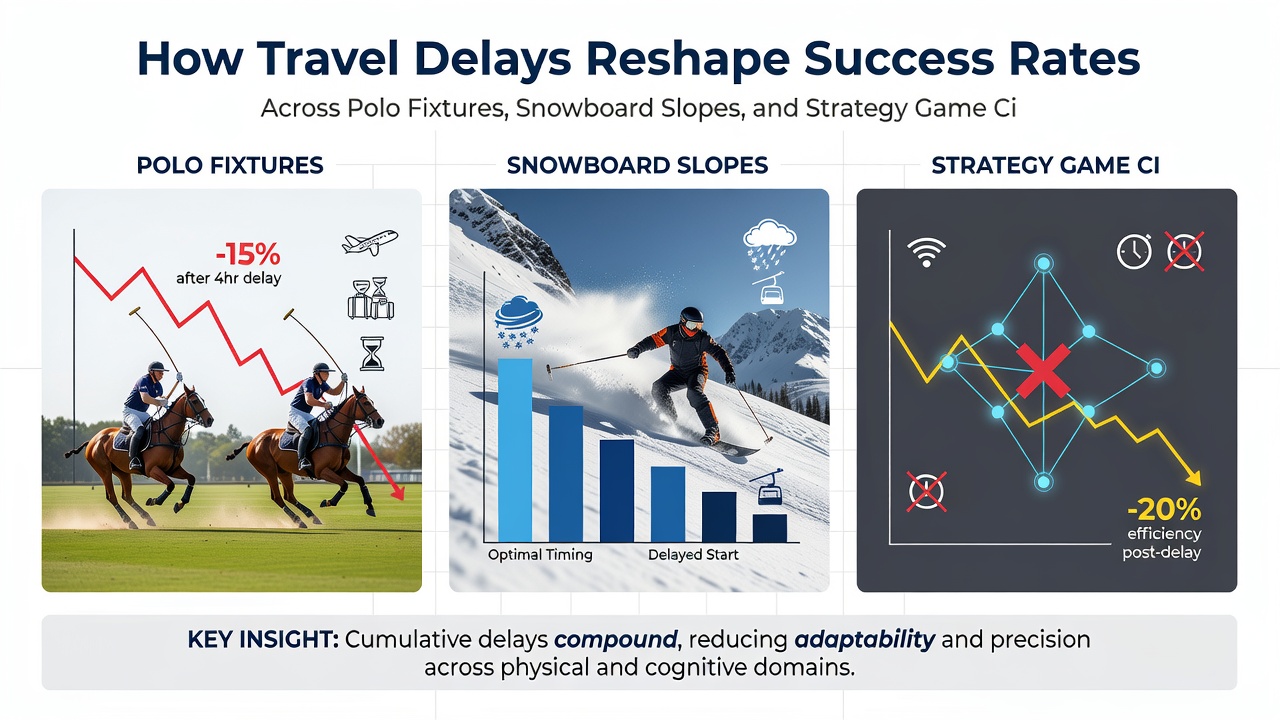
Across polo, snowboarding, and strategy game events, the common thread involves compressed recovery intervals that limit physiological and cognitive restoration. Studies published by the Australian Institute of Sport demonstrate that jet-lag protocols combining light exposure and scheduled meals reduce performance variance when implemented promptly upon arrival, yet many competitors lack the flexibility to apply these measures after unexpected delays. Organizers have begun publishing travel contingency guidelines that recommend redundant routing options, and federations tracking outcomes report modest improvements in aggregate success metrics when teams adopt those recommendations.
Equipment and support staff also experience downstream effects. Grooms, coaches, and analysts traveling alongside competitors face parallel disruptions that limit real-time adjustments during events. Performance databases maintained by governing bodies show that integrated support teams arriving on time correlate with smaller declines in team-level outcomes, whereas fragmented arrivals amplify the impact of individual fatigue across the roster.
Conclusion
Travel delays continue to influence success rates in polo fixtures, snowboard competitions, and strategy game circuits through measurable effects on preparation, recovery, and execution. Data from multiple seasons indicate that structured contingency planning and extended arrival buffers help stabilize outcomes, while compressed timelines consistently widen performance gaps. As schedules grow more demanding, federations and teams that prioritize travel resilience maintain steadier results across these diverse competitive domains.