19 Aug 2026
Portable Interfaces Recalibrating Dominance Metrics in Water Sports Leagues, Billiard Circuits, and Strategy Puzzle Events
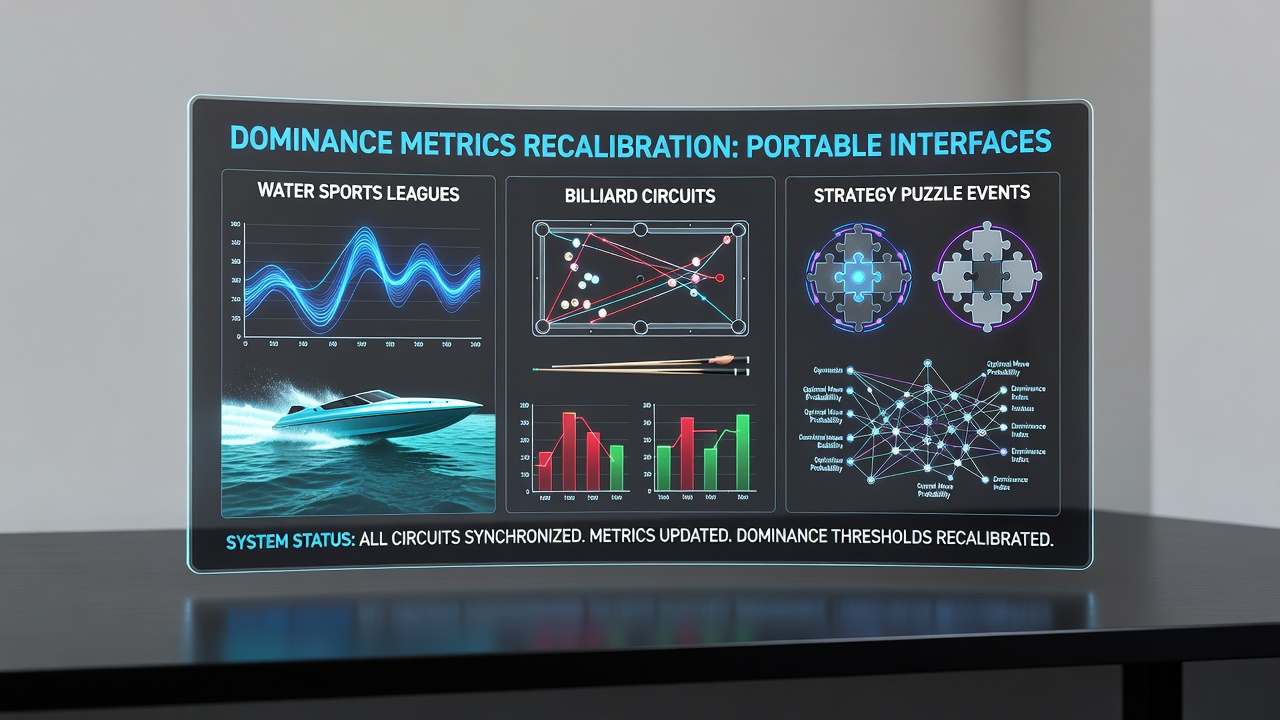
Portable interfaces now feed live performance data into ranking systems across water sports leagues, billiard circuits, and strategy puzzle events, and observers note that these tools adjust dominance metrics faster than traditional manual updates allowed. Data streams from wearable sensors and mobile applications reach central databases within seconds, which alters how officials calculate points, averages, and win rates during ongoing seasons.
Water Sports Leagues Adopt Real-Time Data Feeds
Swimming federations and surf organizations have integrated portable sensors that track stroke efficiency, wave counts, and recovery intervals, and these readings update leaderboard positions immediately after each heat. In August 2026 several Pacific Rim events tested synchronized apps that pulled heart-rate variability and turn-time statistics directly into public standings, which shifted several athletes several places higher or lower within the same day. Researchers from the Australian Institute of Sport published findings showing that such interfaces reduced the lag between performance and ranking publication from hours to under ninety seconds, and governing bodies in multiple regions adopted similar protocols shortly afterward.
Coaches receive alerts on tablets or phones when an athlete's split times deviate from projected curves, and this allows roster decisions to incorporate fresh numbers rather than waiting for end-of-meet reports. Data from these portable systems also feeds into season-long dominance indexes that combine speed, endurance, and consistency scores, and the combined metrics determine qualification thresholds for continental championships.
Billiard Circuits Integrate Mobile Scoring Platforms
Professional billiard associations rolled out standardized mobile scoring applications that record shot difficulty ratings, positional accuracy, and break-and-run percentages during matches, and these figures recalibrate player rankings after every frame. Observers note that the applications connect directly to tournament servers, which means final standings reflect both win-loss records and quantitative shot quality scores rather than wins alone. One circuit in North America reported that the new system reordered the top ten players three separate times during a single weekend event because cumulative precision data overrode simple match counts.

International federations now require players to carry calibrated cue sensors that transmit impact force and spin data, and these measurements contribute to an ongoing dominance index maintained by the governing body. The resulting tables influence seeding for major events, and analysts have documented cases where players with fewer tournament wins but higher average shot metrics climbed several positions in the global order. Figures released by the European Pocket Billiard Federation indicate that the portable interface system processed more than 1.2 million individual shots across sanctioned events in the preceding twelve months, and that volume of data refined the accuracy of the published hierarchies.
Strategy Puzzle Events Update Elo Variants Through App Ecosystems
Organizers of chess, go, and competitive puzzle tournaments distribute portable interfaces that capture move quality evaluations and time-management statistics in real time, and these evaluations adjust rating calculations between rounds rather than after entire tournaments conclude. Participants log into shared platforms that compare each decision against engine benchmarks, and the resulting scores feed into revised standings displayed on venue screens and personal devices. In several 2026 events held across Asia and Europe, players saw their positions change between rounds because the system incorporated fresh puzzle-solving efficiency numbers immediately after each match ended.
Academic researchers at institutions including MIT have examined how these continuous rating streams affect long-term dominance patterns, and their analyses show tighter clustering among top performers once granular metrics replace coarser win-based formulas. Tournament directors report that the interfaces also reduce disputes over scoring because every move carries an auditable quality rating stored in the central ledger, and this transparency has increased participation numbers in regional circuits that adopted the technology early.
Cross-Domain Effects of Unified Portable Systems
Some technology providers now offer modular platforms that serve water sports, billiards, and puzzle competitions through the same backend architecture, and this standardization allows comparative studies across disciplines that previously used incompatible data formats. When one athlete's portable device logs performance in a swimming meet, the same data model can process billiard shot sequences or puzzle move trees, which creates opportunities for analysts to track how dominance metrics evolve under similar interface conditions. Reports from multi-sport technology summits held in 2025 documented early pilots where rankings from all three categories appeared on unified dashboards, and those trials influenced subsequent software updates released before the 2026 season.
Conclusion
Portable interfaces continue to supply the raw measurements that recalibrate dominance metrics in water sports leagues, billiard circuits, and strategy puzzle events, and the pace of adoption indicates these systems will remain central to how rankings are produced and displayed. Organizations that maintain public leaderboards now rely on continuous data pipelines rather than periodic manual reviews, and participants across these domains receive updated positions that reflect the most recent quantifiable actions captured by the portable tools.