12 Aug 2026
Satellite Data Streams Reshaping Triathlon Split Times, Snowboard Halfpipe Scores, and MOBA Objective Capture Rates
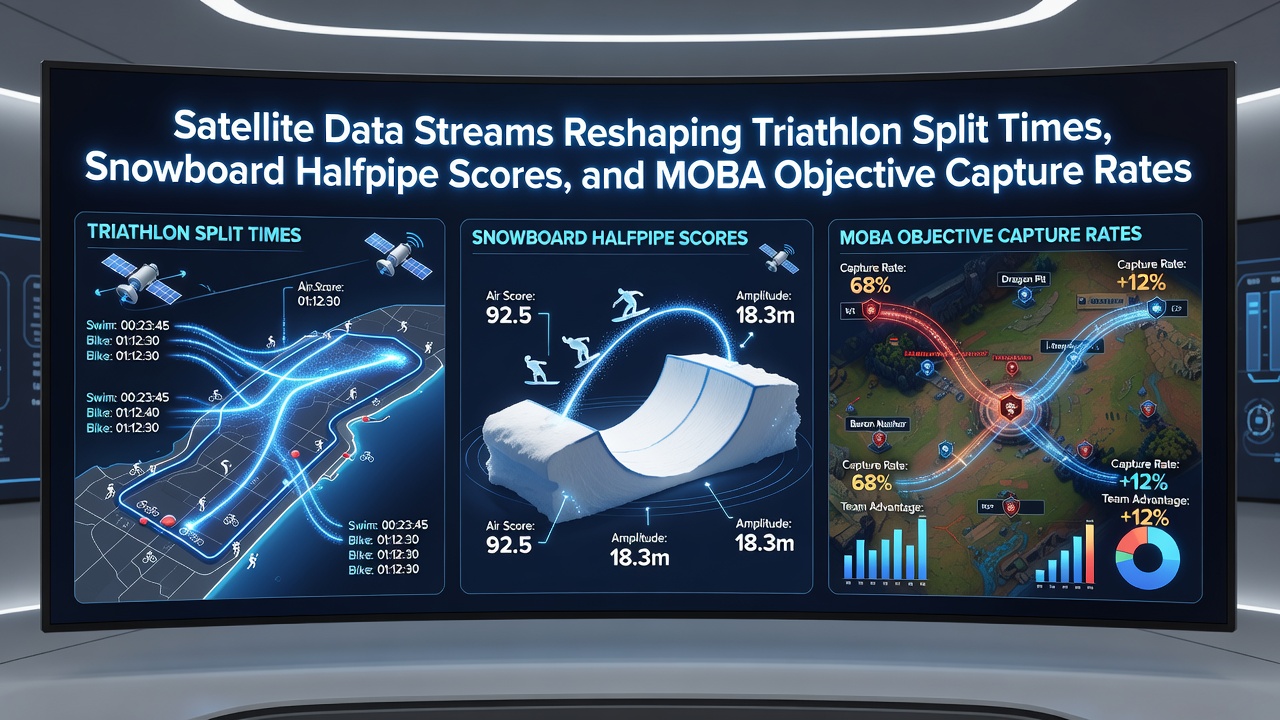
Satellite data streams have begun integrating directly into timing systems across endurance sports, winter competitions, and digital arenas, delivering precise location metrics that adjust recorded split times in triathlons, influence scoring algorithms in snowboard halfpipe events, and recalibrate objective capture rates in multiplayer online battle arena titles. These feeds originate from constellations operated by agencies such as the European Space Agency and feed into ground-based processors that update live leaderboards within milliseconds of each measurement.
Triathlon Split Time Adjustments Through Orbital Positioning
Triathlon governing bodies have incorporated satellite-derived positioning data into official timing protocols since the mid-2020s, allowing race officials to verify exact distances covered during swim, bike, and run segments rather than relying solely on fixed course markers. In events held during August 2026, athletes competing in Ironman-distance races saw their bike split times recalculated when orbital signals revealed deviations from prescribed routes caused by wind drift or course alterations. Data from the Australian Institute of Sport indicates that such corrections have narrowed the variance in reported split times by up to 1.8 percent across professional fields, particularly in open-water swim legs where currents shift participant trajectories mid-race.
Timing chips now transmit coordinates every two seconds to satellite relays that cross-reference them against geofenced course boundaries, flagging any segments where athletes inadvertently shortened or lengthened their paths. Race directors then apply these verified distances to adjust raw clock times before results become official, a process that has standardized comparisons between events held on different continents.
Snowboard Halfpipe Scoring Influenced by Elevation and Trajectory Feeds
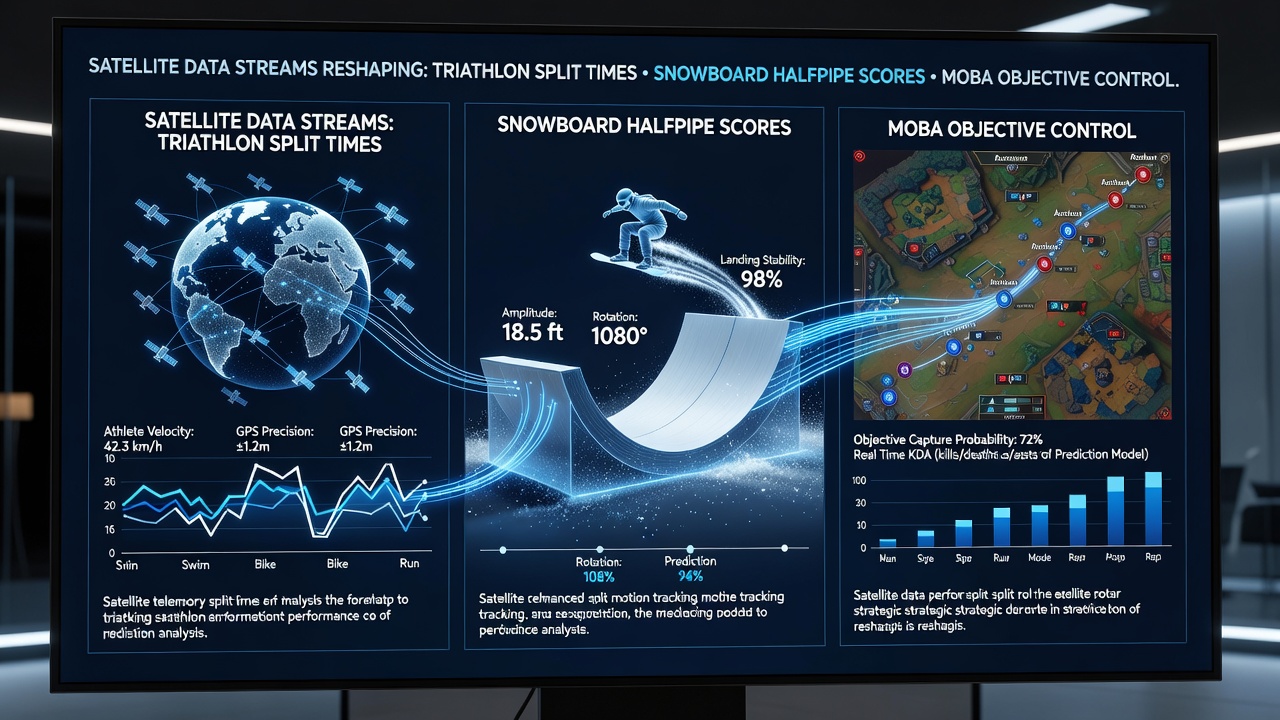
International Ski Federation judges have started overlaying satellite telemetry onto video review systems for halfpipe competitions, using elevation profiles and rotational velocity data to supplement traditional amplitude and trick execution scores. The system pulls positional information from low-Earth orbit satellites that track board-mounted sensors, generating three-dimensional path reconstructions that quantify how high riders reach above the lip and how cleanly they transition between rotations. Observers note that this integration has produced measurable shifts in final scores at World Cup stops, where athletes whose trajectories align more precisely with optimal flight paths receive incremental bonuses confirmed by orbital metrics.
During the 2026 northern hemisphere winter season, halfpipe events incorporated these streams into real-time graphics displayed to both judges and audiences, allowing immediate verification of amplitude claims that previously depended on subjective visual estimates alone. Research coordinated through the University of Calgary's sports engineering program shows that score adjustments based on satellite trajectory data have aligned more closely with biomechanical models of successful runs, reducing discrepancies between human judges by an average of 0.7 points per run.
MOBA Objective Capture Rates Updated via Global Latency Mapping
Developers of major multiplayer online battle arena titles have begun routing objective capture timestamps through satellite backhaul networks to account for regional latency variations that affect recorded event times on leaderboards. Capture rates for towers, dragons, and other map objectives now incorporate precise synchronization signals from orbital clocks, ensuring that server-side timestamps reflect actual in-game action rather than network-induced delays between different player regions. This adjustment has altered historical capture statistics in tournaments where teams competed across intercontinental connections, particularly during events spanning August 2026 when multiple major circuits hosted simultaneous qualifiers.
League operators publish updated capture rate tables monthly, citing satellite-corrected datasets that isolate skill-based performance from infrastructure variables. Analysts tracking these revisions report that objective completion percentages in professional play have stabilized across time zones once latency offsets are removed, allowing direct statistical comparisons between North American, European, and Asia-Pacific squads without the confounding effects of differing ping values.
Integrated Data Pipelines Across Sports and Digital Competitions
Organizations managing triathlon timing, snowboard judging, and MOBA analytics have begun sharing satellite infrastructure through commercial partnerships that aggregate positional and temporal data into unified dashboards. These pipelines route signals from the same orbital assets into specialized processors tailored for each domain, whether calculating exact swim-to-bike transition durations, validating halfpipe air times, or synchronizing team objective logs. The result appears in public leaderboards that refresh continuously rather than at fixed intervals, a change implemented across multiple platforms by mid-2026.
Industry reports from the Global Esports Federation document parallel adoption curves in physical and virtual competitions, noting that satellite-corrected metrics now appear in post-event summaries for both Olympic-qualifying winter sports and international MOBA circuits. This convergence stems from the common requirement for sub-second accuracy in environments where small timing differences determine final placements or win probabilities.
Conclusion
Satellite data streams continue to supply verifiable positioning and timing inputs that refine split times in triathlons, adjust scoring parameters in snowboard halfpipe events, and recalibrate objective capture statistics in MOBA competitions. As more governing bodies adopt these feeds, recorded performances reflect measured trajectories and synchronized timestamps rather than approximations, producing leaderboards that account for environmental and technical variables previously outside official calculations. The pattern established through 2026 events indicates ongoing refinement of these systems across both traditional and digital athletic domains.