27 May 2026
Tracing Wearable Tech Impacts on Precision Metrics Across Archery Targets, Cycling Stage Wins, and Swimming Record Boards
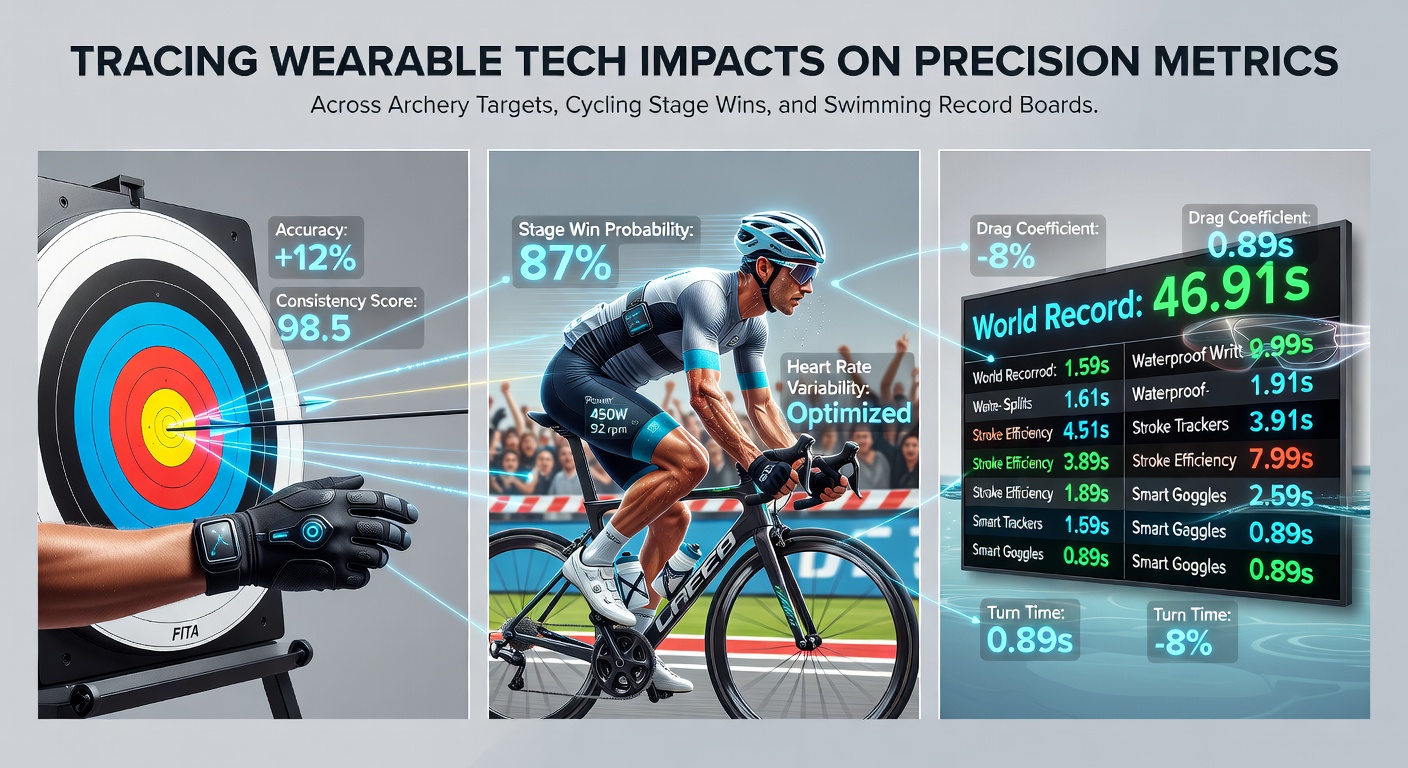 Wearable technology continues to reshape how precision gets measured in target sports and endurance events alike, with devices tracking everything from bow tension in archery to stroke efficiency in pools and power output on roads. Data collected through these tools feeds directly into performance charts, helping athletes refine movements while coaches adjust training loads based on real-time feedback loops. As competitions evolve through 2026, records from May events highlight ongoing shifts in how metrics get captured and compared across disciplines. Archery stands out as one area where small adjustments yield large score differences on target boards. Sensors attached to bows and wrists monitor draw length consistency, release timing, and even subtle tremors that affect arrow flight paths. Studies from the University of British Columbia indicate that archers incorporating heart rate variability data from chest straps improved grouping accuracy by measurable margins during indoor and outdoor rounds. Those metrics then translate into tighter clusters on score sheets, particularly when athletes review post-session breakdowns that flag deviations in elbow positioning or breathing patterns. Cycling presents another clear case where power meters and GPS units combine to influence stage outcomes in multi-day races. Riders monitor cadence alongside torque application through crank-based sensors, which allows fine-tuning of effort distribution over varied terrain. Figures from the Union Cycliste Internationale reveal that teams relying on integrated wearable streams have posted consistent gains in time-trial splits and sprint classifications since the start of the current season. Observers note that elevation data paired with heart rate zones helps prevent early burnout, leading to more controlled finishes that accumulate points on overall leaderboards. Swimming record boards reflect similar influences from motion-capture wearables that analyze kick rates, stroke length, and wall push-off forces. Devices clipped to ankles or integrated into caps provide lap-by-lap comparisons that coaches use to tweak technique mid-training block. Research published through the Australian Institute of Sport links improved turn efficiency directly to these sensor readings, with swimmers shaving fractions of seconds that compound across longer events like 400-meter individual medleys.
 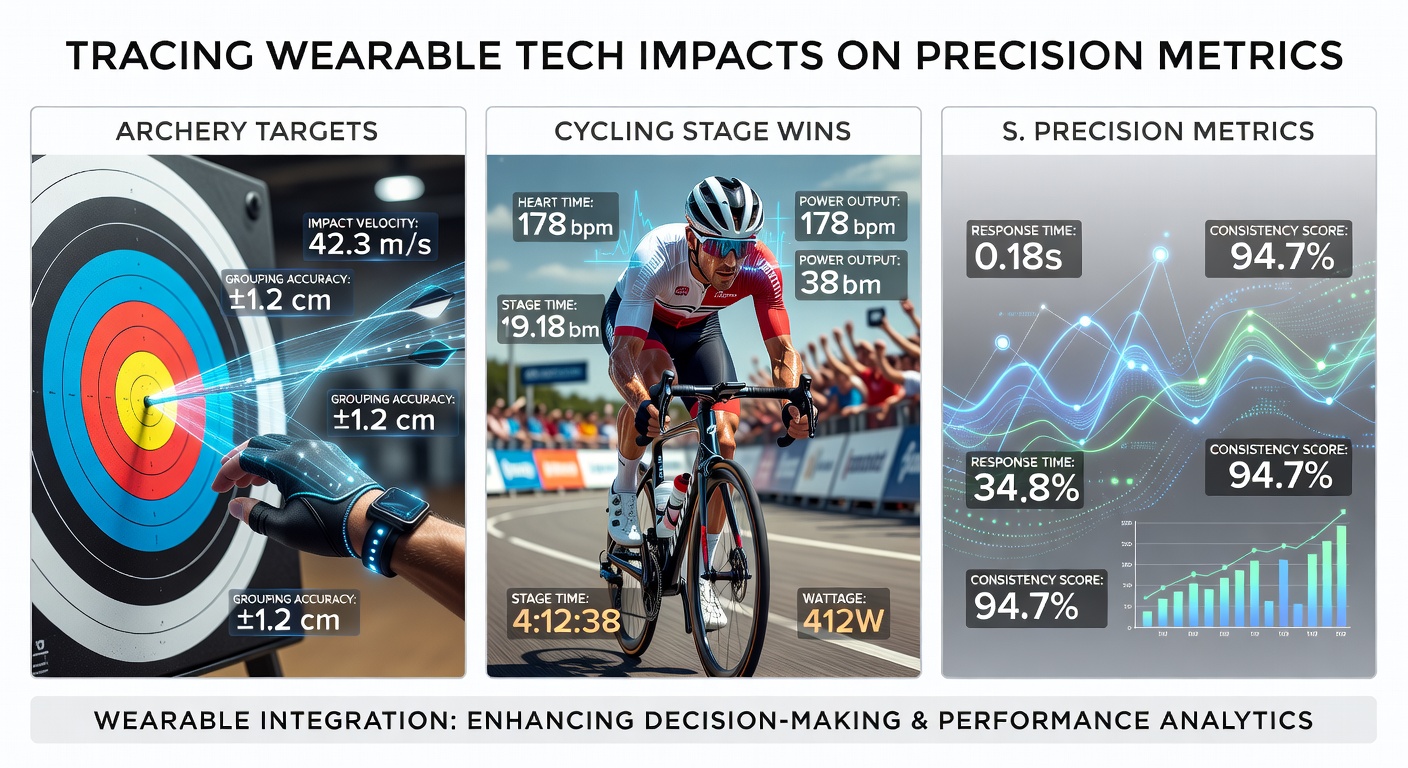 What's interesting emerges when these technologies intersect across different venues, because the same core principles of data validation apply whether an athlete stands on a shooting line or dives into a lane. In May 2026, several international meets incorporated unified platforms that aggregate archery grouping statistics alongside cycling wattage averages and swimming split times, creating cross-sport benchmarks that federations now reference during selection processes. This integration stems from standardized file formats that allow direct comparison without manual reconciliation steps. Precision metrics themselves gain reliability through calibration protocols that manufacturers update seasonally. Archers benefit when accelerometer drift gets corrected before major tournaments, while cyclists see torque sensor accuracy verified against wind-tunnel baselines. Swimmers encounter fewer discrepancies in underwater motion tracking once gyroscope offsets receive routine resets. Each adjustment feeds into cleaner datasets that appear on official result sheets, reducing disputes over marginal gains that previously required video review alone. Coaches across these sports report using the outputs to construct individualized plans that emphasize weak phases identified through sensor logs. One documented program in European training centers paired archery release data with cycling recovery intervals to build mental focus routines that carried over into pool sessions. Such cross-application avoids isolated training silos and instead builds transferable focus skills that show up as steadier arrow groups, sustained power numbers, and fewer false starts at the blocks. Equipment manufacturers continue refining battery life and waterproofing to match demands of extended sessions, whether those occur on outdoor ranges or during open-water swims. The resulting hardware produces denser data streams that algorithms process into visual heat maps, highlighting where precision breaks down during fatigue accumulation. Those maps then guide targeted drills that address specific variables rather than broad conditioning work. Federations maintain oversight through approved device lists that ensure fairness while still permitting innovation within defined parameters. This balance keeps records credible as new sensor generations enter circulation, particularly when governing bodies publish validation reports that detail error margins for each category of measurement. Athletes who adopt approved models gain access to granular feedback without risking disqualification from non-compliant gear. The pattern holds steady into mid-2026, where wearable-derived insights appear routinely in post-competition analyses shared by national programs. Archery score sheets, cycling classification tables, and swimming record boards all incorporate footnotes referencing sensor contributions to final placements. This documentation practice supports longitudinal tracking that reveals how incremental refinements accumulate over multiple seasons. Conclusion
Wearable systems have established themselves as standard components in precision-focused training environments for archery, cycling, and swimming. The metrics they generate inform adjustments that appear directly on target tallies, stage classifications, and record listings. Continued refinement of these tools promises further alignment between measured performance and actual outcomes across upcoming cycles.
What's interesting emerges when these technologies intersect across different venues, because the same core principles of data validation apply whether an athlete stands on a shooting line or dives into a lane. In May 2026, several international meets incorporated unified platforms that aggregate archery grouping statistics alongside cycling wattage averages and swimming split times, creating cross-sport benchmarks that federations now reference during selection processes. This integration stems from standardized file formats that allow direct comparison without manual reconciliation steps. Precision metrics themselves gain reliability through calibration protocols that manufacturers update seasonally. Archers benefit when accelerometer drift gets corrected before major tournaments, while cyclists see torque sensor accuracy verified against wind-tunnel baselines. Swimmers encounter fewer discrepancies in underwater motion tracking once gyroscope offsets receive routine resets. Each adjustment feeds into cleaner datasets that appear on official result sheets, reducing disputes over marginal gains that previously required video review alone. Coaches across these sports report using the outputs to construct individualized plans that emphasize weak phases identified through sensor logs. One documented program in European training centers paired archery release data with cycling recovery intervals to build mental focus routines that carried over into pool sessions. Such cross-application avoids isolated training silos and instead builds transferable focus skills that show up as steadier arrow groups, sustained power numbers, and fewer false starts at the blocks. Equipment manufacturers continue refining battery life and waterproofing to match demands of extended sessions, whether those occur on outdoor ranges or during open-water swims. The resulting hardware produces denser data streams that algorithms process into visual heat maps, highlighting where precision breaks down during fatigue accumulation. Those maps then guide targeted drills that address specific variables rather than broad conditioning work. Federations maintain oversight through approved device lists that ensure fairness while still permitting innovation within defined parameters. This balance keeps records credible as new sensor generations enter circulation, particularly when governing bodies publish validation reports that detail error margins for each category of measurement. Athletes who adopt approved models gain access to granular feedback without risking disqualification from non-compliant gear. The pattern holds steady into mid-2026, where wearable-derived insights appear routinely in post-competition analyses shared by national programs. Archery score sheets, cycling classification tables, and swimming record boards all incorporate footnotes referencing sensor contributions to final placements. This documentation practice supports longitudinal tracking that reveals how incremental refinements accumulate over multiple seasons. Conclusion
Wearable systems have established themselves as standard components in precision-focused training environments for archery, cycling, and swimming. The metrics they generate inform adjustments that appear directly on target tallies, stage classifications, and record listings. Continued refinement of these tools promises further alignment between measured performance and actual outcomes across upcoming cycles.
Wearable technology continues to reshape how precision gets measured in target sports and endurance events alike, with devices tracking everything from bow tension in archery to stroke efficiency in pools and power output on roads. Data collected through these tools feeds directly into performance charts, helping athletes refine movements while coaches adjust training loads based on real-time feedback loops. As competitions evolve through 2026, records from May events highlight ongoing shifts in how metrics get captured and compared across disciplines. Archery stands out as one area where small adjustments yield large score differences on target boards. Sensors attached to bows and wrists monitor draw length consistency, release timing, and even subtle tremors that affect arrow flight paths. Studies from the University of British Columbia indicate that archers incorporating heart rate variability data from chest straps improved grouping accuracy by measurable margins during indoor and outdoor rounds. Those metrics then translate into tighter clusters on score sheets, particularly when athletes review post-session breakdowns that flag deviations in elbow positioning or breathing patterns. Cycling presents another clear case where power meters and GPS units combine to influence stage outcomes in multi-day races. Riders monitor cadence alongside torque application through crank-based sensors, which allows fine-tuning of effort distribution over varied terrain. Figures from the Union Cycliste Internationale reveal that teams relying on integrated wearable streams have posted consistent gains in time-trial splits and sprint classifications since the start of the current season. Observers note that elevation data paired with heart rate zones helps prevent early burnout, leading to more controlled finishes that accumulate points on overall leaderboards. Swimming record boards reflect similar influences from motion-capture wearables that analyze kick rates, stroke length, and wall push-off forces. Devices clipped to ankles or integrated into caps provide lap-by-lap comparisons that coaches use to tweak technique mid-training block. Research published through the Australian Institute of Sport links improved turn efficiency directly to these sensor readings, with swimmers shaving fractions of seconds that compound across longer events like 400-meter individual medleys.
What's interesting emerges when these technologies intersect across different venues, because the same core principles of data validation apply whether an athlete stands on a shooting line or dives into a lane. In May 2026, several international meets incorporated unified platforms that aggregate archery grouping statistics alongside cycling wattage averages and swimming split times, creating cross-sport benchmarks that federations now reference during selection processes. This integration stems from standardized file formats that allow direct comparison without manual reconciliation steps. Precision metrics themselves gain reliability through calibration protocols that manufacturers update seasonally. Archers benefit when accelerometer drift gets corrected before major tournaments, while cyclists see torque sensor accuracy verified against wind-tunnel baselines. Swimmers encounter fewer discrepancies in underwater motion tracking once gyroscope offsets receive routine resets. Each adjustment feeds into cleaner datasets that appear on official result sheets, reducing disputes over marginal gains that previously required video review alone. Coaches across these sports report using the outputs to construct individualized plans that emphasize weak phases identified through sensor logs. One documented program in European training centers paired archery release data with cycling recovery intervals to build mental focus routines that carried over into pool sessions. Such cross-application avoids isolated training silos and instead builds transferable focus skills that show up as steadier arrow groups, sustained power numbers, and fewer false starts at the blocks. Equipment manufacturers continue refining battery life and waterproofing to match demands of extended sessions, whether those occur on outdoor ranges or during open-water swims. The resulting hardware produces denser data streams that algorithms process into visual heat maps, highlighting where precision breaks down during fatigue accumulation. Those maps then guide targeted drills that address specific variables rather than broad conditioning work. Federations maintain oversight through approved device lists that ensure fairness while still permitting innovation within defined parameters. This balance keeps records credible as new sensor generations enter circulation, particularly when governing bodies publish validation reports that detail error margins for each category of measurement. Athletes who adopt approved models gain access to granular feedback without risking disqualification from non-compliant gear. The pattern holds steady into mid-2026, where wearable-derived insights appear routinely in post-competition analyses shared by national programs. Archery score sheets, cycling classification tables, and swimming record boards all incorporate footnotes referencing sensor contributions to final placements. This documentation practice supports longitudinal tracking that reveals how incremental refinements accumulate over multiple seasons. Conclusion
Wearable systems have established themselves as standard components in precision-focused training environments for archery, cycling, and swimming. The metrics they generate inform adjustments that appear directly on target tallies, stage classifications, and record listings. Continued refinement of these tools promises further alignment between measured performance and actual outcomes across upcoming cycles.