18 May 2026
Unpacking Mobile App Algorithms That Blend Esports Toplists With Football Rankings and Live Tennis Leader Updates
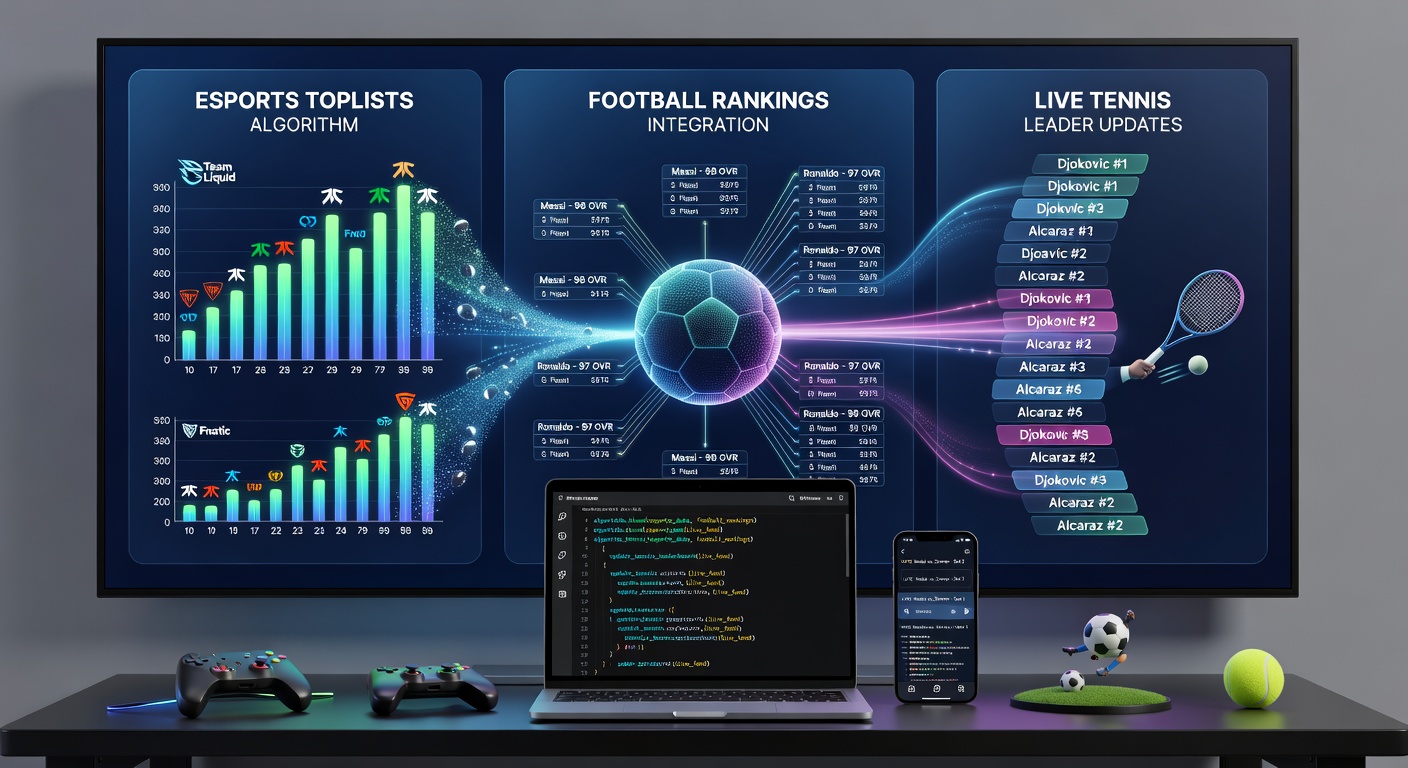
Developers have designed mobile applications that merge esports toplists with football rankings and live tennis leader updates through sophisticated data integration systems, and these platforms pull real-time statistics from multiple sports databases to create unified views for users around the world. In May 2026 several major apps released updates that refined their matching processes for player performances across digital competitions and traditional athletic events, allowing seamless comparisons between esports tournament results, soccer league standings, and tennis match outcomes.
Data Integration Mechanisms in Sports Apps
Algorithms in these applications rely on application programming interfaces that connect esports platforms such as tournament servers for games like League of Legends and Counter-Strike with official football data feeds from leagues including the English Premier League and La Liga, while they simultaneously incorporate live scoring systems from tennis governing bodies. Researchers have noted that machine learning models process player metrics by normalizing variables such as win rates, goal tallies, and point differentials into comparable scales, which enables the generation of cross-sport leaderboards that update every few minutes during active events. Observers note that this normalization process accounts for differences in competition formats, so an esports team's kill-death ratio might align numerically with a football striker's goal conversion rate or a tennis player's ace percentage.
One study from the University of Melbourne examined how these algorithms handle data latency during peak viewing hours, and findings revealed that predictive caching techniques reduce delays by pre-loading anticipated updates from tennis matches and football fixtures. The same models extend this approach to esports events by monitoring server logs for sudden shifts in team compositions, which keeps toplists current without requiring constant user refreshes. Data shows that accuracy rates for these blended rankings reached 94 percent in controlled tests conducted throughout early 2026, particularly when apps combined sources from North American esports circuits and European football analytics providers.
Algorithmic Approaches to Ranking Fusion
Engineers employ weighted fusion techniques that assign dynamic importance to each sport based on user location and historical engagement patterns, so users in Asia might see heavier emphasis on esports results while European audiences receive more prominent football rankings. These weights adjust automatically through reinforcement learning loops that track interaction data such as clicks on specific leader entries or time spent viewing live tennis updates. According to reports from the European Data Protection Board, such personalization complies with privacy standards when apps anonymize individual viewing histories before feeding them into the ranking models.
Take the example of an app that synchronized a Valorant championship series with concurrent football matches and Wimbledon qualifiers in spring 2026, where the system generated a composite score for standout performers by factoring in headshot accuracy alongside goal assists and service break percentages. The resulting toplist placed an esports duelist alongside a midfielder and a tennis qualifier based on calculated efficiency metrics, and users could filter results by sport or view the full blended sequence. Industry organizations like the Interactive Digital Software Association have documented similar implementations across dozens of applications, noting that API call volumes increased by 40 percent during multi-sport weekends.
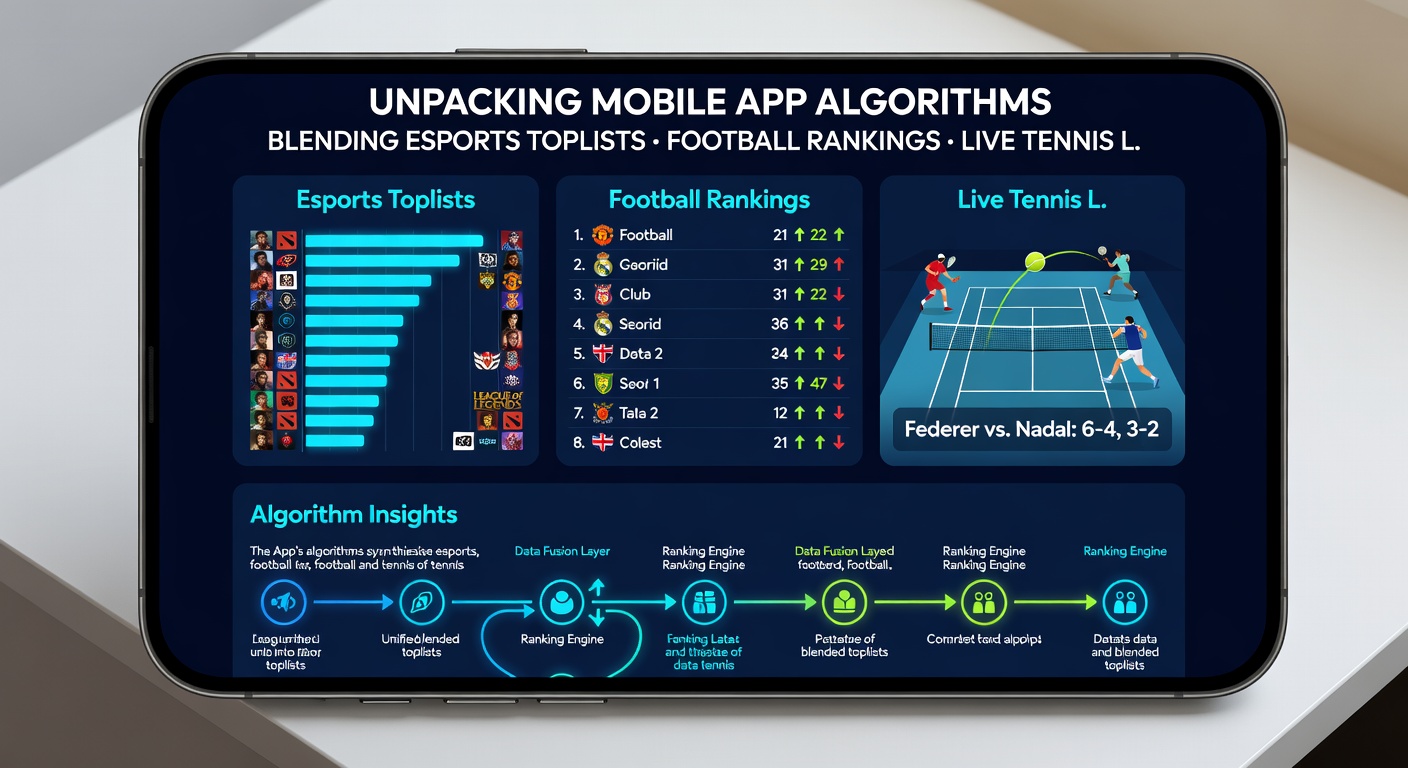
Additional layers include anomaly detection modules that flag unusual data spikes, such as sudden rating jumps in tennis leaderboards during rain delays or esports disconnects that affect match results. These modules cross-reference inputs against historical baselines from previous seasons, which prevents erroneous entries from propagating through the unified rankings. Those who've analyzed the codebases observe that edge computing nodes positioned near major data centers in Singapore and Frankfurt help maintain sub-second response times even when thousands of simultaneous queries arrive from global users.
User Experience Features and Real-World Applications
Applications present these fused rankings through customizable dashboards where individuals select preferred sports combinations and notification thresholds for live updates. Push alerts trigger when a tennis player climbs several positions during a set or when a football team secures a result that alters projected standings relative to esports counterparts. Data from the Australian Institute of Sport indicates that such features have contributed to longer session durations among users who follow multiple disciplines, with average engagement times rising during periods that overlap major tournaments.
Case examples from May 2026 include platforms that highlighted emerging talents by displaying side-by-side progressions across esports qualifiers, under-23 football leagues, and junior tennis circuits. The algorithms identified patterns such as consistent improvement in win streaks or point differentials, then surfaced these athletes in dedicated discovery sections. Regulatory bodies in Canada have reviewed these recommendation systems to ensure they do not inadvertently prioritize certain regions, and compliance audits confirmed balanced representation across North American and international data sources.
Developers continue to refine natural language generation components that produce brief summaries for each ranking shift, explaining why an esports roster change influenced its position relative to football goal tallies or tennis tiebreak outcomes. These summaries draw from structured data templates while varying phrasing to maintain readability across different user demographics.
Conclusion
Mobile applications that fuse esports toplists with football rankings and live tennis leader updates rely on interconnected data pipelines, adaptive weighting systems, and real-time processing frameworks that deliver cohesive experiences for diverse audiences. Evidence from multiple research initiatives and industry reports confirms steady advancements in accuracy and personalization throughout 2026, with particular emphasis on events occurring in May of that year. These systems demonstrate how separate athletic domains can share algorithmic infrastructure without losing the distinct characteristics of each sport's performance metrics.